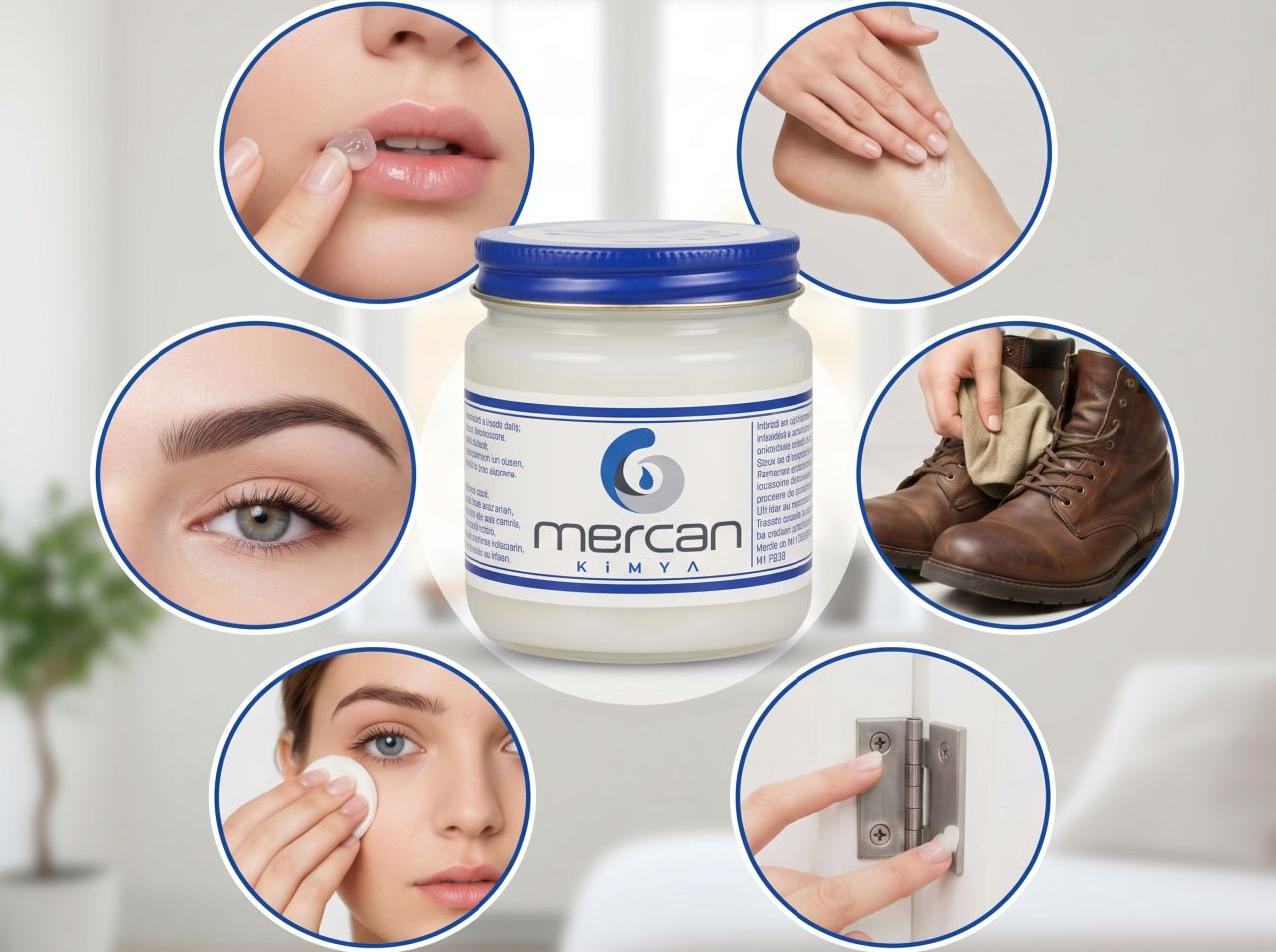
What is Petroleum Jelly?
Petroleum jelly is a semi-solid, homogeneous mixture of hydrocarbons derived from petroleum refining. Thanks to its occlusive barrier properties and lubricating nature, it serves as an indispensable raw material across cosmetics, pharmaceuticals, leather, and industrial sectors.
Chemically, it is composed of saturated microcrystalline hydrocarbons and high-viscosity mineral oils, creating a stable gel network that locks in moisture and shields surfaces from external agents.
Characterized by its odorless, non-reactive profile and excellent skin compatibility, petroleum jelly provides unmatched protective performance. As Mercan Kimya, we manufacture high-purity petroleum jelly grades with tailored melting points, color stability, and penetration values customized to your manufacturing processes.
Key Properties of Petroleum Jelly
White to pale yellow translucent gel,
Smooth, semi-solid texture,
Superior occlusive barrier capability,
Chemically inert and hydrophobic.
How is Petroleum Jelly Produced?
The production of petroleum jelly relies on the precise refining, bleaching, and blending of selected paraffinic hydrocarbons and premium mineral oils.
Selected Heavy Residues → Vacuum Distillation → Hydrogenation / Decoloration → Microcrystalline Blending → High-Purity Petroleum Jelly
In Mercan Kimya modern manufacturing units, the raw materials are thoroughly refined to eliminate impurities, polycyclic aromatic hydrocarbons, and unwanted odors, resulting in ultra-clean grades compliant with pharmacopeia and industrial benchmarks.
Grades of Petroleum Jelly
Depending on purification intensity and the target application area, petroleum jelly is classified into several key grades:
- Pharma & Cosmetic Grade (White Petroleum Jelly): Ultra-pure, snow-white grade formulated for top-tier skincare, ointments, and medical products.
- Yellow Petroleum Jelly: Highly refined grade with a slight natural tint, widely used in personal care formulations and technical salves.
- Industrial & Technical Grade: Formulated for anti-corrosion, wire rope lubrication, cable filling, and rubber processing.
- Veterinary Grade: Protective and barrier ointment base used in livestock care and animal health products.
Where is Petroleum Jelly Used?
The moisture-locking barrier and non-reactive characteristics of petroleum jelly make it vital across extensive sectors:
- Cosmetic lotions, lip balms, creams, and hair pomades,
- Pharmaceutical ointment bases and barrier dressing formulations,
- Leather care, conditioning, and waterproofing treatments,
- Telecommunication cable filling compounds and insulation barrier pastes,
- Corrosion prevention on metal surfaces, machinery, and battery terminals,
- Rubber, plastic extrusion, and mold release processing.
Frequently Asked Questions
What is the melting range of petroleum jelly?
Petroleum jelly typically melts between 45°C and 60°C, softening upon contact with body temperature to ensure smooth skin spreadability.
How does petroleum jelly protect surfaces and skin?
It creates a continuous occlusive hydrophobic film that locks in moisture while preventing atmospheric humidity, oxidation, and contaminants from contacting the surface.
How to choose the suitable grade?
Selection should consider the intended sector (cosmetic, pharma, or technical), consistency (cone penetration value), drop point, and color specifications.
Mercan Kimya manufactures high-standard petroleum jelly solutions tailored to industrial demands, supported by dedicated quality control and continuous R&D engineering.
Get in touch with our expert sales team to request detailed technical datasheets and product samples.
📩 Contact: