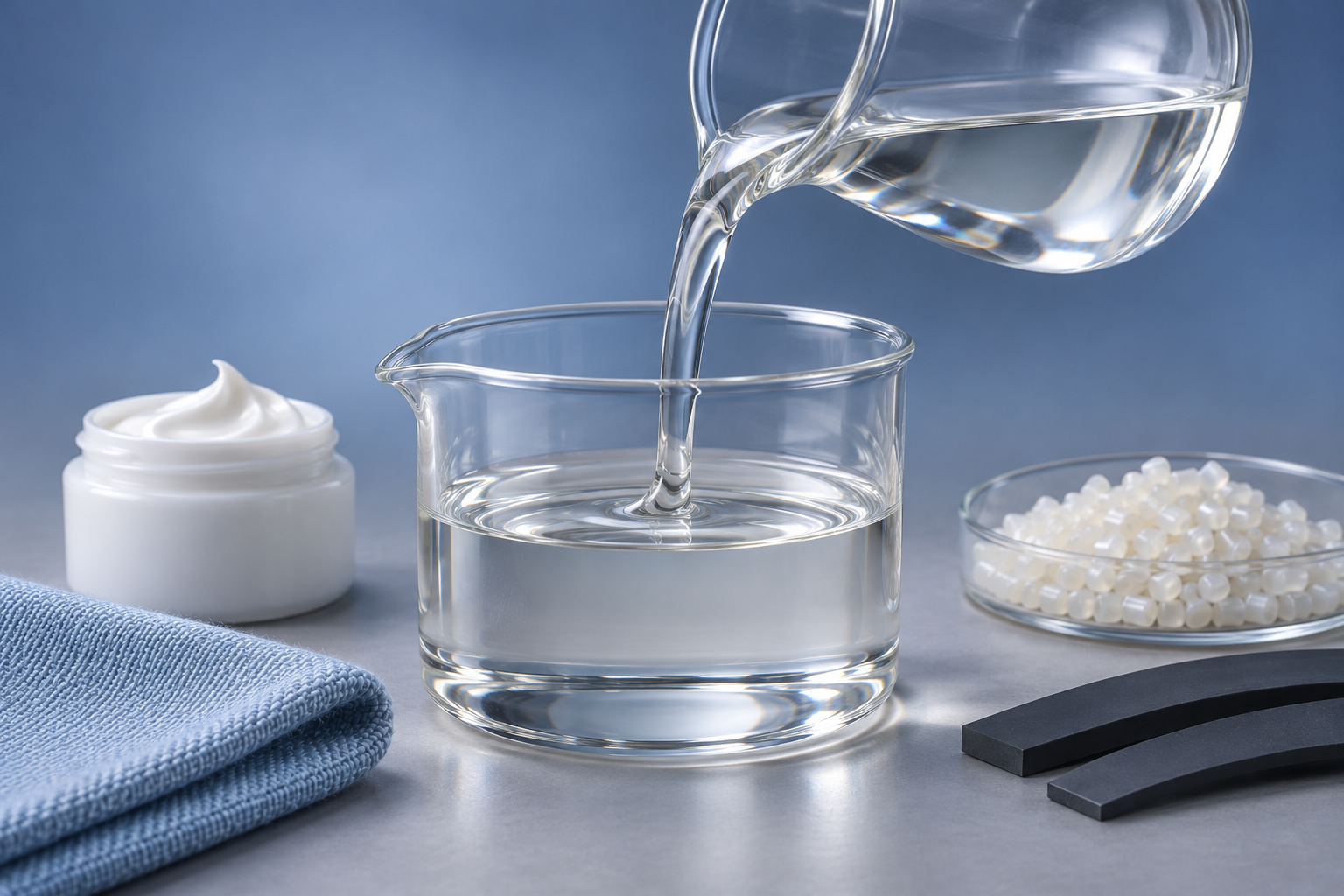
Liquid paraffin is a refined mineral oil derived from petroleum. It is also known as liquid paraffin oil and paraffin oil. In cosmetics, it is used as an emollient and carrier oil. In textile, plastics and rubber manufacturing, it can serve as a lubricant or processing aid, depending on the application.
When selecting a product, determine the oil’s role in the formulation, the temperature at which it will be used and how it will be dosed. These details provide a starting point for evaluating viscosity and other technical properties.
What is paraffin oil?
Paraffin oil is a liquid mixture of saturated hydrocarbons. Mineral oil is the name of a broader product group. On a cosmetic ingredient list, Paraffinum Liquidum refers to liquid paraffin. When purchasing raw materials, use the exact product code and the corresponding technical data sheet. European Commission inventory of cosmetic ingredients
What is liquid paraffin used for?
The role of liquid paraffin depends on the application. In a lotion, it helps the product spread. On a production line, it can be considered for lubrication or to facilitate processing.
Cosmetics and personal care
It is used as an emollient or carrier oil in products such as creams, lotions and massage oils. It can form a film on the skin’s surface that helps reduce moisture loss. During formulation development, assess spreadability, skin feel and product stability together.
Textile manufacturing
It can be used as a lubricant when processing fibers and yarns. When choosing a product, consider the fiber type, the application temperature and how the oil will be fed into the production line.
Plastics and rubber processing
It can serve as a lubricant or processing aid. The choice of product depends on the polymer type, the process temperature and the surface properties of the finished product.
If you are formulating a massage oil, see our article for examples of spreadability and texture on the skin. Using liquid paraffin in massage oils
What is the difference between liquid paraffin, paraffin wax and petroleum jelly?
The easiest way to tell them apart is by their physical state at room temperature. Liquid paraffin is a fluid oil, paraffin wax is a waxy solid, and petroleum jelly is a semisolid mixture. This difference affects the material’s role in the formulation and how it is applied.
| Material | At room temperature | Example of use |
|---|---|---|
| Liquid paraffin | Fluid oil | Carrier oil in lotions and lubricant in certain textile processes |
| Paraffin wax | Waxy solid | Candle making or coating |
| Petroleum jelly | Spreadable semisolid | Protective layer in cosmetic formulations or technical applications |
What should you look for when choosing liquid paraffin?
Compare viscosity and measurement conditions
Viscosity describes how much an oil resists flow. A lower-viscosity oil may spread more easily. The desired consistency or lubricating film may require a different viscosity. Compare products at the same temperature and using the same measurement method. Mercan Kimya’s product table lists viscosity at 40 °C. Check the relevant technical data sheet for the unit and measurement method.
In Mercan Kimya’s product range, Liquid Paraffin 15 is described as a low-viscosity product and Liquid Paraffin 32 as a medium-viscosity product. For spray or thin-film applications, use a sample to assess flow and spreading. For lubrication, test how the film behaves under process conditions.
Request technical documents for your application
The technical data sheet (TDS) lists the product’s technical specifications, the safety data sheet (SDS) provides safe handling and storage information, and the certificate of analysis (CoA) reports the test results for the relevant batch. When comparing products, check that each document matches the product code you are evaluating.
Include these details in your sample request. Share the intended application, operating temperature, dosing method and any technical specifications you already have. Set your evaluation criteria in advance, such as spreadability and texture for a cosmetic product, or pumpability and material compatibility for an industrial process.
Frequently asked questions about liquid paraffin
Are liquid paraffin and paraffin oil the same product?
Yes. Both names refer to the same group of raw materials. Viscosity, pour point and other technical properties can vary by grade.
Does paraffin wax become liquid paraffin when melted?
When heated, paraffin wax temporarily becomes liquid and solidifies again as it cools. Liquid paraffin belongs to a separate group of mineral oils that are fluid at room temperature.
How do you choose liquid paraffin for cosmetic formulations?
First, define the oil’s role in the formulation and the desired product texture. Then review the technical specifications and documentation for the intended use. Test a sample in the final formulation to assess appearance, spreadability and stability. Mercan Kimya liquid paraffin products and technical specifications
Choosing the right liquid paraffin starts with defining the oil’s role in the application. Once you have set the target viscosity and conditions of use, you can evaluate candidate products using technical documentation and sample trials.
If you plan to replace an existing product, you can share its technical data sheet with the Mercan Kimya team and explain what you need from the replacement.
For technical information, product inquiries and sample requests
“Let’s find the right raw material for your application with Mercan Kimya.”